Climate change is no longer a distant or abstract risk. Rising temperatures, erratic rainfall, floods, droughts, and heatwaves are already affecting livelihoods, infrastructure, water systems, agriculture, and public health—particularly in climate-vulnerable regions such as the Indus Basin. While global efforts to reduce greenhouse gas emissions remain essential, adaptation planning is equally critical to reduce harm from climate impacts that are already unavoidable.
Adaptation planning provides a structured approach to understanding climate risks and implementing actions that protect communities, ecosystems, and economies. At the local level, District Adaptation Plans (DAPs) play a vital role in translating national climate commitments into practical, on-ground action.
What Is Adaptation Planning?
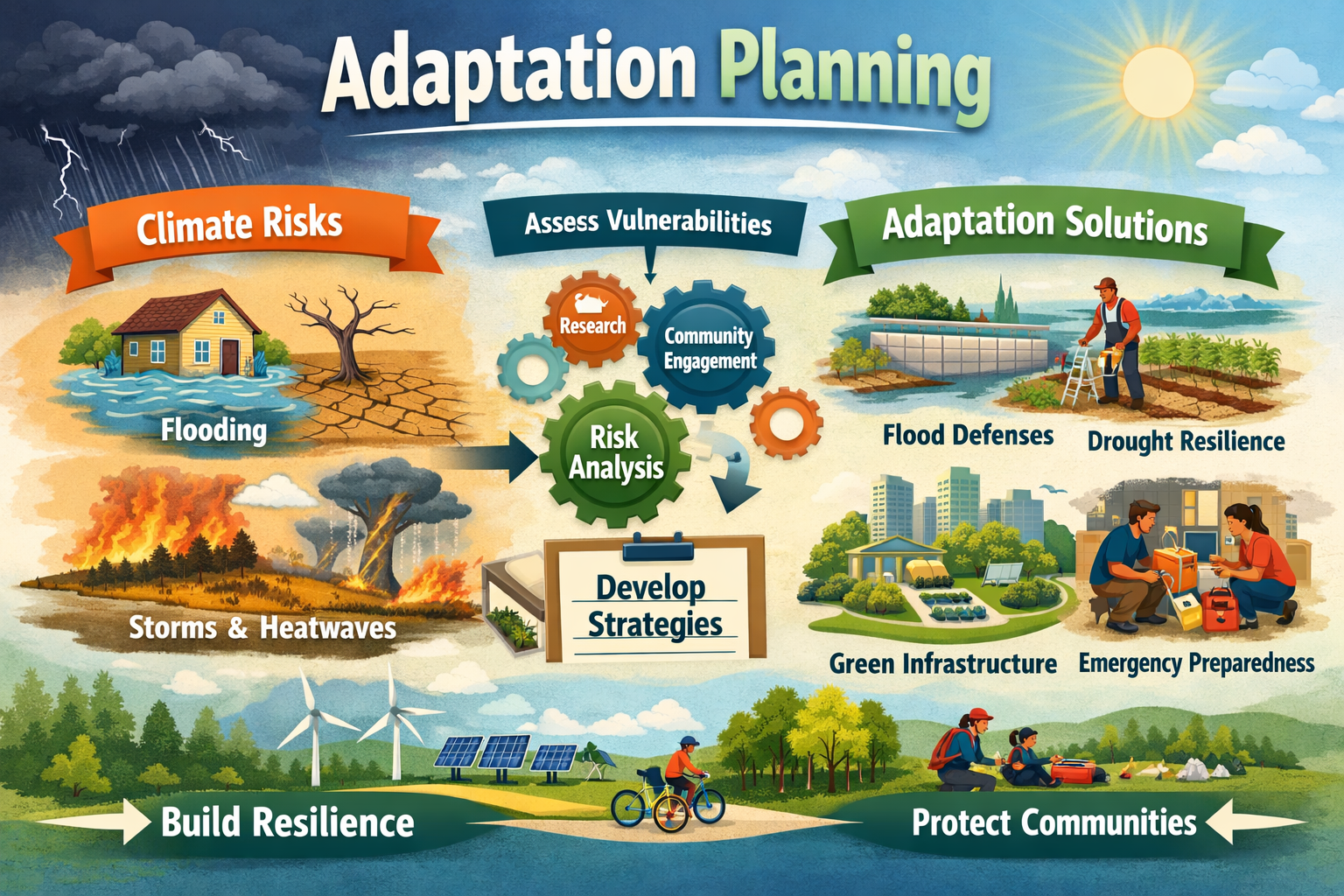
Adaptation planning is the process of identifying, assessing, and addressing climate risks in a way that reduces vulnerability and enhances resilience. According to the Intergovernmental Panel on Climate Change (IPCC), adaptation involves “adjustments in ecological, social, or economic systems in response to actual or expected climatic stimuli and their effects” (IPCC, 2022).
In practical terms, adaptation planning helps governments and communities answer key questions:
- What climate hazards are we exposed to?
- Who and what are most vulnerable?
- What actions can reduce current and future risks?
- How can adaptation be integrated into existing development plans?
Unlike emergency response, adaptation planning is anticipatory and long-term, focusing on reducing future losses rather than reacting after disasters occur.
Understanding District Adaptation Plans (DAPs)
A District Adaptation Plan is a locally driven planning instrument that identifies climate risks and priority adaptation actions at the district level. It bridges the gap between national climate strategies and community realities.
DAPs typically include:
- Climate risk and vulnerability assessment
- Identification of sector-specific impacts (water, agriculture, health, ecosystems, infrastructure)
- A list of priority adaptation actions
- Roles and responsibilities of local departments
- Alignment with district development and budgetary processes
Because climate impacts are highly localized, district-level planning ensures that adaptation measures reflect local geography, livelihoods, and socio-economic conditions, rather than relying solely on national averages.
Why District Adaptation Plans Matter
- Climate Impacts Are Local
Climate change does not affect all regions in the same way. Flood risks may dominate in riverine districts, while drought and heat stress are more severe in arid and semi-arid zones. District Adaptation Plans allow local governments to respond to context-specific risks, making interventions more effective and efficient.
- Protecting Lives and Livelihoods
Evidence shows that early adaptation reduces disaster losses. The Global Commission on Adaptation estimates that investing in climate resilience can deliver benefit-cost ratios of up to 10:1, particularly in areas such as early warning systems, climate-resilient infrastructure, and water management (Global Commission on Adaptation, 2019).
By prioritizing measures such as flood-resilient housing, drought-tolerant crops, and heat-health action plans, DAPs help safeguard vulnerable populations.
Adaptation Actions Across Key Sectors
Water Resources
Climate change is intensifying water stress through altered rainfall patterns and glacial melt. District-level adaptation actions may include:
- Rainwater harvesting systems
- Rehabilitation of ponds, wetlands, and floodplains
- Improved groundwater monitoring and recharge
- Efficient irrigation techniques
The IPCC confirms that integrated water resource management significantly reduces climate-related water risks when tailored to local conditions (IPCC, 2022).
Agriculture and Food Security
Agriculture is highly sensitive to temperature extremes and rainfall variability. Adaptation measures at the district level include:
- Promotion of climate-resilient crop varieties
- Adjusted planting calendars
- Farmer advisory services using climate information
- Soil moisture conservation techniques
The Food and Agriculture Organization (FAO) highlights that climate-smart agriculture improves productivity while enhancing resilience to climate shocks (FAO, 2018).
Health
Rising temperatures and extreme events increase the risk of heat stress, vector-borne diseases, and malnutrition. District Adaptation Plans support:
- Heat-health action plans
- Climate-resilient health facilities
- Disease surveillance linked to climate data
- Public awareness campaigns
The World Health Organization (WHO) identifies local health adaptation planning as a key strategy to protect populations from climate-related health risks (WHO, 2023).
Disaster Risk Reduction (DRR)
Adaptation and disaster risk reduction are closely linked. DAPs often integrate:
- Early warning systems
- Flood zoning and land-use planning
- Climate-resilient infrastructure standards
- Community preparedness and evacuation planning
According to the UN Office for Disaster Risk Reduction, climate-informed DRR significantly reduces disaster losses and recovery costs (UNDRR, 2022).
Community and Department-Led Actions
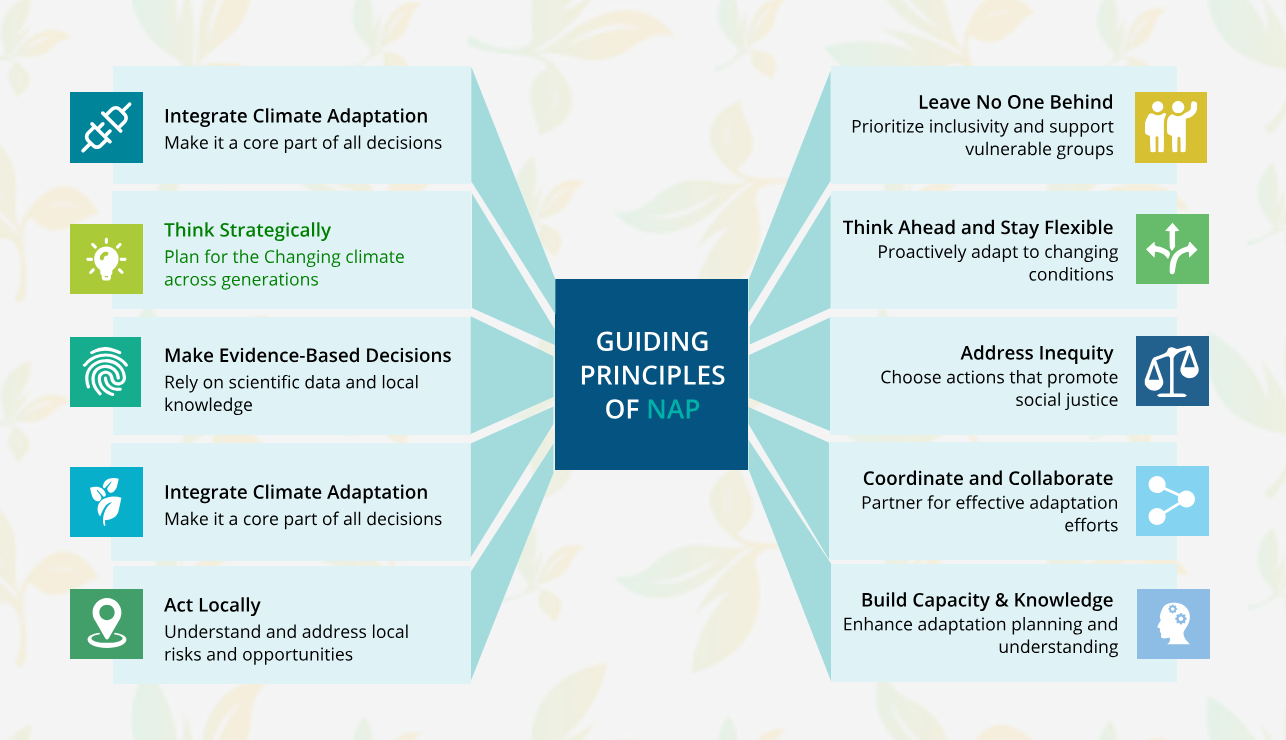
Successful adaptation planning depends on institutional coordination and community participation. District governments play a central role in aligning line departments such as irrigation, agriculture, health, and planning around shared climate objectives.
Community involvement ensures:
- Local knowledge informs planning
- Interventions are socially acceptable
- Ownership and sustainability of adaptation actions
The United Nations Development Programme (UNDP) emphasizes that locally led adaptation improves equity, effectiveness, and long-term resilience (UNDP, 2021).
Why Implementation Planning Is Critical
Adaptation plans are only effective if they are implemented. Many climate strategies fail due to weak institutional capacity, unclear financing pathways, or lack of integration into development planning.
Implementation of readiness requires:
- Clear prioritization of actions
- Cost estimates and funding sources
- Defined institutional responsibilities
- Monitoring and evaluation frameworks
The IPCC stresses that adaptation outcomes improve significantly when planning is linked to finance, governance, and long-term development processes (IPCC, 2022).
Conclusion
Adaptation planning is a foundational tool for responding to climate change in a structured, proactive, and equitable manner. District Adaptation Plans play a critical role in translating national climate goals into locally relevant actions that protect lives, livelihoods, and ecosystems.
For initiatives such as Living Indus, district-level adaptation planning offers a pathway to climate resilience that is grounded in science, responsive to local realities, and aligned with sustainable development. Strengthening implementation readiness and community participation will be essential to ensure that adaptation planning delivers real, measurable benefits on the ground.
Verified Sources
- IPCC (2022) – AR6 Working Group II: Impacts, Adaptation and Vulnerability
Intergovernmental Panel on Climate Change - Global Commission on Adaptation (2019) – Adapt Now: A Global Call for Leadership on Climate Resilience
- FAO (2018) – Climate-Smart Agriculture Sourcebook
Food and Agriculture Organization of the United Nations - UNDP (2021) – Locally Led Adaptation: From Principles to Practice
- UNDRR (2022) – Global Assessment Report on Disaster Risk Reduction
- WHO (2023) – Climate Change and Health
This is dummy copy. It is not meant to be read. Accordingly, it is difficult to figure out when to end it. If this were real copy, it would have ended long ago, because‚ as we all know‚ no one reads body copy, and even fewer read body copy this long. But then, this is dummy copy. It is not meant to be read. Period.